
India's trade with West Asia saw a significant decline of over 28% in April, marking the second consecutive month of contraction. This downturn is attributed to severe shipping disruptions stemming from the ongoing conflict involving the US, Israel, and Iran, particularly impacting the crucial Strait of Hormuz waterway.

US President Donald Trump has lauded India as an 'essential partner' and 'trusted ally' in addressing regional challenges, particularly its 'big role' in West Asia peace efforts, following discussions with Prime Minister Narendra Modi at the G7 Summit.

A recently finalised peace deal between the US and Iran, set to be signed on June 19, is expected to significantly benefit India's economy by boosting exports to West Asia, stabilising the rupee, and easing inflationary pressures, according to exporters and experts.

Indian startup funding plummeted by 43 per cent year-on-year to $7.81 billion between March 1 and June 15, 2026, largely due to the West Asia conflict, which has amplified global risk perceptions, tightened liquidity, and led to rupee depreciation, making global investors cautious.
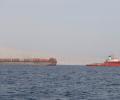
Crude oil prices reached a new record high in futures trade, both domestically and internationally, as escalating military tensions between the US and Iran in West Asia continue to fuel market volatility. Diplomatic efforts concerning the Strait of Hormuz are being closely watched for potential price stabilisation.
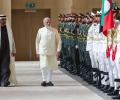
Prime Minister Narendra Modi has offered India's support to bring peace to West Asia during talks with UAE President Sheikh Mohamed bin Zayed Al Nahyan. Both countries signed agreements to strengthen strategic collaborations in energy and defence.

Indian benchmark indices, Sensex and Nifty, closed almost flat in choppy trade as investors remained cautious due to ongoing uncertainty in West Asia, relentless foreign fund outflows, and anticipation of the RBI's monetary policy decision.

Analysts predict that developments in West Asia, their impact on crude oil prices, and the trading activity of foreign institutional investors (FIIs) will be crucial factors influencing the Indian stock market this week.

The Sri Lankan government attributes the sharp depreciation of the rupee against the US dollar to the ongoing conflict in West Asia, citing increased costs for essential imports like gas, fertiliser, and oil.

Markets will look for clear guidance on how the MPC interprets the uncertainty and what it implies for the future course of monetary policy, points out Rajeswari Sengupta.

Indian benchmark indices Sensex and Nifty experienced a significant slump in early trade, mirroring weak global trends, as escalating tensions in West Asia, particularly a drone attack on the UAE's Barakah nuclear facility, pushed crude oil prices higher. Track Sensex, Nifty50 movement and key market drivers for May 18, 2026.

India's exports experienced their steepest fall in five months, declining by 7.44 per cent in March to $38.92 billion, primarily due to trade uncertainty and geopolitical tensions, with shipments to West Asia contracting by over 50 per cent.

The Reserve Bank of India (RBI) has kept its key lending rate, the repo rate, unchanged at 5.25 per cent for the second consecutive time, citing concerns over rising energy prices, supply disruptions from the West Asia crisis, and potential inflationary pressures.

Escalating geopolitical tensions in West Asia are beginning to disrupt India's automotive supply chain, leading to rising commodity prices, logistics bottlenecks, material shortages, and pressure on consumer demand, with two-wheeler makers already raising prices.
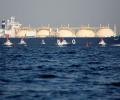
Iranian Deputy Foreign Minister Kazem Gharibabadi has urged India to take the lead in bringing peace to West Asia, highlighting the UAE's role in stalling BRICS consensus on the conflict. Gharibabadi also discussed a new framework with Oman for merchant vessels passing through the Strait of Hormuz.

Gold and silver prices saw a significant decline in the national capital, with silver falling by Rs 7,800 to Rs 2.43 lakh per kilogram and gold by Rs 1,500 to Rs 1.54 lakh per 10 grams, as investors booked profits amid persistent doubts over the durability of the West Asia ceasefire.

India on Tuesday expressed deep concern over the escalating conflict in Iran and the Gulf region, urging all sides to exercise restraint and prioritise civilian safety.
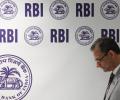
Uncertainties stemming from the West Asia crisis and its potential impact on inflation and economic growth were key factors in the Reserve Bank of India's Monetary Policy Committee (MPC) decision to maintain the status quo on interest rates, according to the recently released MPC meeting minutes.

Russia's First Deputy Prime Minister Denis Manturov met with Indian leaders to discuss strengthening bilateral ties in key sectors amidst the escalating conflict in West Asia.
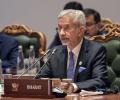
India has expressed serious concerns about the West Asia crisis and its potential impact on energy supplies and maritime stability, urging BRICS nations to find practical solutions to geopolitical challenges and unilateral sanctions.

Prime Minister Narendra Modi addressed the Lok Sabha on the West Asia crisis, expressing concern over its impact on the global economy and assuring the safety of Indian citizens in the region.
Prime Minister Narendra Modi addressed the Lok Sabha on the West Asia crisis, expressing concern over its impact on the global economy and assuring the safety of Indian citizens in the region.

The economic fallout of the West Asia crisis, the prevailing security situation in the Indo-Pacific and ways to boost cooperation in critical minerals and technology are expected to top the agenda at a crucial meeting of the Quad foreign ministers on Tuesday.

Indian equity benchmark indices Sensex and Nifty rallied in early trade, driven by reports of a second round of talks between the US and Iran, which are fostering hopes for a resolution to the West Asia conflict, coupled with Brent crude oil prices trading below the USD 100 per barrel mark.

The ongoing conflict in West Asia is severely disrupting Bikaner's food exports, causing delays, rising costs, and impacting the supply of popular snacks like bhujia and papad to Gulf and European markets.

Amid rising tensions in West Asia, China is urging all parties to cease military operations, following Trump's appeal for help in securing the Strait of Hormuz.

The escalating crisis in West Asia and its impact on the global energy supply chain are expected to dominate deliberations at a two-day meeting of BRICS foreign ministers to be hosted by India.

Prime Minister Narendra Modi and US Secretary of State Marco Rubio discussed various aspects of India-US bilateral ties, focusing on defence, trade, energy, and technology. Rubio extended an invitation from President Donald Trump for PM Modi to visit the US.

Indian benchmark indices Sensex and Nifty experienced volatility due to conflicting developments in West Asia, including reports of the Strait of Hormuz closure, which led to a rebound in crude oil prices and heightened investor concerns about supply disruptions and inflation.

US Central Command (CENTCOM) forces conducted additional strikes against multiple targets in Iran, on Saturday (local time), at the commander in chief, US President Donald Trump's direction.

Amidst global energy market volatility driven by the West Asia crisis, Russia has proposed increasing its crude oil and natural gas supplies to India, strengthening bilateral energy ties and aiming for USD 100 billion in annual trade by 2030.

The Indian rupee depreciated by 52 paise to settle at 93.35 against the US dollar, driven by failed US-Iran peace talks, surging crude oil prices due to a potential US blockade of Iranian ports, and a global flight to the greenback. This geopolitical uncertainty is also leading to foreign capital withdrawal from domestic equities.

Analysts predict that developments in West Asia and their impact on crude oil prices will heavily influence investor sentiment in the upcoming week. Global market trends, foreign investor activity, and rupee-dollar movement will also play a role.

Despite geopolitical tensions and FII outflows, Indian small and midcap stocks have not only recovered losses but are also outperforming largecap indices, driven by attractive valuations, domestic institutional support, and a rebound in earnings.

Asian Development Bank (ADB) on Friday warned that India's limited crude oil reserves of about 100 million barrels - sufficient for only 40-45 days of consumption - leave the country particularly vulnerable to supply disruptions through the Strait of Hormuz amid the ongoing war in West Asia.
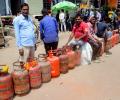
The Indian government has implemented several measures to mitigate external risks, support the balance of payments, and maintain macroeconomic stability amidst the ongoing West Asia crisis, according to Minister of State for Finance Pankaj Chaudhary.

Reliance Industries Ltd (RIL) has expressed caution regarding 'extreme volatility' risks stemming from the West Asian conflict, which could impact global oil demand and the company's margins, while also noting that near-term retail consumption demand may remain sensitive to macro conditions. Chairman Mukesh Ambani, in the annual report, remained silent on the timeline for Jio Platforms' anticipated public listing, stating the group will 'continue to evaluate strategic pathways'.

Indian equities on Dalal Street saw volatility as global market trends and fresh tariff concerns linked to Donald Trump impacted investor sentiment. Track Sensex, Nifty50 movement and key market drivers for April 9, 2026.

Moody's Ratings has downgraded India's growth forecast for financial year 2026-27 (FY27) to 6 per cent from 6.8 per cent, attributing the revision to weaker consumption and industrial activity, elevated energy prices, and rising input costs stemming from the West Asia conflict.

Pakistan's Foreign Minister Ishaq Dar met with his counterparts from Egypt and Turkiye in Islamabad ahead of a quadrilateral summit, including Saudi Arabia, to discuss the ongoing conflict in West Asia and explore avenues for peace.
